
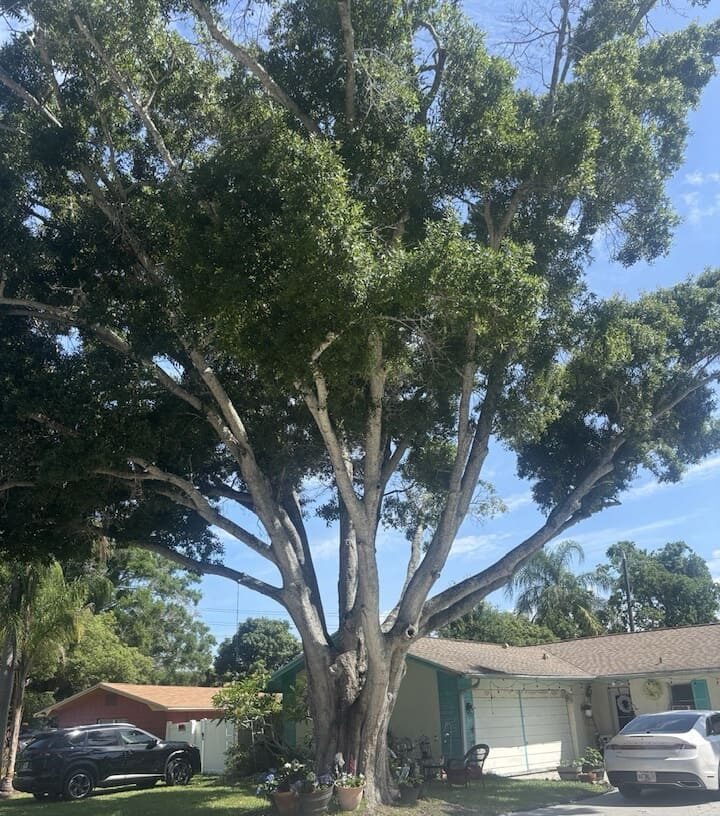
Florida’s rainy season doesn’t just bring afternoon showers—it brings powerful winds, saturated soil, lightning, and sudden storms that can turn a healthy-looking yard into a safety risk overnight. Trees that seem stable in dry weather may struggle when the ground softens and their roots lose grip.
The good news? Most storm-related tree damage is preventable. With the right maintenance routine, you can strengthen your trees, reduce hazards, and protect your home before severe weather arrives.
Start with a Simple Walkaround Inspection
You don’t need special equipment to spot early warning signs—just take a slow walk around your yard and observe your trees from different angles.
Look for things like dead branches, cracks in major limbs, peeling bark, hollow spots, or mushrooms growing near the base. These are often signs that something is happening inside the tree long before it becomes obvious.
Also pay attention to leaning trees or soil that looks lifted or uneven around the trunk. That can indicate root instability, which becomes more dangerous when heavy rain arrives.
Don’t Ignore Dead or Hanging Branches
Dead branches are one of the biggest risks during Florida storms. They may look harmless on a calm day, but once strong winds hit, they can snap without warning.
Removing these weak limbs ahead of time is one of the simplest ways to prevent damage. It also helps the tree focus energy on healthier growth and improves overall structure.
A well-pruned tree doesn’t just look better—it handles wind and rain much more effectively.
Pay Attention to What’s Happening Underground
While most people focus on what they can see above ground, the real foundation of tree safety is below the surface.
During heavy rains, soil becomes loose and waterlogged. If a tree already has compromised roots, this is when problems show up—sometimes suddenly.
Check for exposed roots, standing water around the base, or soil that looks like it’s shifting or cracking. These signs should never be ignored, especially for large trees near homes or driveways.
Watch for Hidden Decay and Disease
Not all tree problems are obvious. Some trees continue to look healthy while slowly weakening inside.
Fungal growth, hollow trunks, soft wood, or large dead sections in the canopy are all red flags. These issues weaken structural integrity and make trees more likely to fail during storms.
Rainy weather can also speed up decay, which is why early detection matters so much.
Prune Smart, Not Heavy
Pruning is one of the most effective ways to prepare trees for storm season—but only when done correctly.
Good pruning removes weak, crossing, or overcrowded branches, allowing wind to pass through the canopy more easily. This reduces stress during storms and lowers the risk of breakage.
But over-pruning or “topping” a tree can actually make it weaker and more unstable. The goal is balance, not stripping the tree down.
Keep Trees Clear of Homes and Power Lines
Trees growing close to roofs, fences, driveways, or utility lines need extra attention before the rainy season peaks.
Even strong branches can become dangerous when wind speeds increase. A single broken limb can damage roofing, block driveways, or cause power outages.
If branches are close to power lines, never attempt to handle them yourself—this is a serious safety hazard that requires professional care.
Mulch the Right Way for Healthier Roots
Mulch is like a protective layer for your tree’s root system, especially during heavy rainfall.
A 2–4 inch layer helps regulate soil moisture, prevents erosion, and supports healthy root growth. But placement matters—mulch should never touch the trunk directly.
Keeping a small gap around the base prevents rot, pests, and disease while still giving the roots the protection they need.
Give Young Trees Extra Attention
Newly planted trees are still developing strong root systems, which makes them more vulnerable during storms.
After heavy rain or wind, check that they are still upright and that the soil hasn’t shifted. Stakes should support the tree without restricting natural movement.
These early years are critical—good care now builds long-term strength and stability.
Know When It’s Time to Remove a Tree
Sometimes, maintenance isn’t enough.
If a tree is severely leaning, hollow, dead, or showing advanced decay, it may become a serious hazard during storms. In these cases, removal is often the safest decision—not just for your property, but for nearby structures and people.
It’s never easy to remove a tree, but it’s far better than dealing with emergency storm damage.
Get a Professional Tree Inspection Before Storm Season Peaks
Some of the most dangerous tree issues are hidden from view. Internal decay, unstable roots, and structural weaknesses often require trained eyes to identify.
A professional inspection can help you understand:
- Which trees are safe
- Which need pruning
- Which may require treatment
- And which should be removed
This is especially important for large trees near homes, streets, or high-traffic areas.
Stay Storm-Ready with Tree Tech LLC
Florida’s rainy season can be unpredictable, but your tree care doesn’t have to be. A simple routine—inspection, pruning, root awareness, and professional support—can dramatically reduce storm-related risks. Healthy, well-maintained trees don’t just survive the rainy season—they thrive through it.
If you’re unsure whether your trees are ready for Florida’s rainy season, now is the best time to take action. Small issues today can turn into major problems once storms intensify.
The team at Tree Tech LLC provides expert tree inspections, safe pruning, hazardous tree removal, and full storm preparation services across Pinellas County.
Don’t wait for the next storm to reveal hidden risks—call (727) 410-4280 or send us a message today for a professional assessment and FREE estimate, and keep your property safe all season long.