
Florida’s Climate Is Great for Trees—And Tree Diseases
Florida’s warm temperatures, high humidity, and frequent rainfall create the perfect environment for beautiful trees to thrive. Unfortunately, these same conditions also provide an ideal breeding ground for many tree diseases.
The challenge for homeowners is that tree diseases often start subtly. A few discolored leaves or a small patch of dead bark may not seem alarming at first, but these symptoms can quickly develop into serious health problems if left untreated.
Understanding the most common tree diseases found in Florida can help you identify issues early, take preventive action, and know when it’s time to call a professional.
1. Oak Wilt
Oak Wilt is a serious fungal disease that affects oak trees and can spread rapidly through interconnected root systems. Once infected, a tree may decline quickly, especially during periods of environmental stress.
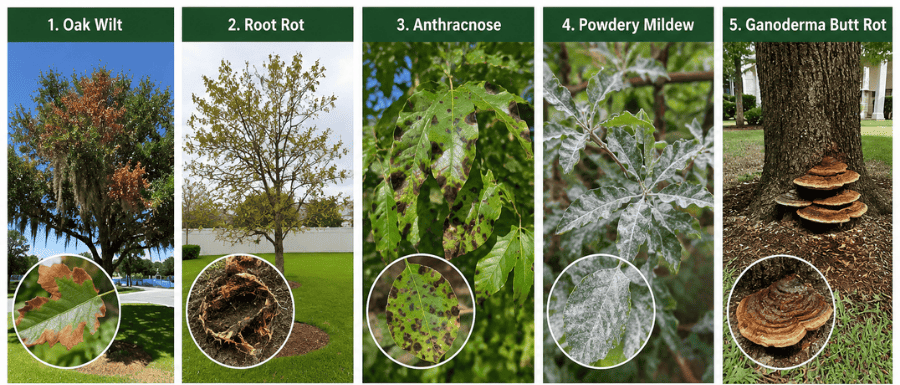
- Common Symptoms. One of the first signs of Oak Wilt is leaf discoloration. Leaves often develop brown edges while portions remain green. Premature leaf drop is also common, and homeowners may notice thinning canopies as the disease progresses. Over time, branches begin to die back, and the entire tree can decline rapidly.
- Prevention and Treatment. Preventing wounds on oak trees is one of the best ways to reduce the risk of infection. Fresh cuts and storm damage can create entry points for fungal spores. Proper pruning during recommended seasons and immediate treatment of damaged areas can help protect trees.
Professional diagnosis is important because Oak Wilt can spread quickly to nearby trees through root systems. Early intervention may help slow the disease’s progression.
2. Root Rot
Root Rot is one of the most common tree problems in Florida due to the state’s frequent rainfall and poorly drained soils. Various fungi can attack the root system, reducing the tree’s ability to absorb water and nutrients.
- Common Symptoms. Trees affected by Root Rot may show yellowing leaves, thinning foliage, slowed growth, or premature leaf drop. Because the disease begins underground, symptoms often appear only after significant root damage has occurred.
- Prevention and Treatment. Proper drainage is the most effective defense against Root Rot. Avoid overwatering and ensure water does not pool around the base of trees for extended periods.
If Root Rot is identified early, improving drainage conditions and reducing stress on the tree may help slow further damage. Severe cases often require removal to prevent safety hazards.
3. Anthracnose
Anthracnose is a fungal disease that commonly affects shade trees throughout Florida, especially during wet and humid periods. While it rarely kills mature trees, repeated infections can weaken them over time.
- Common Symptoms. Infected trees may develop brown or black spots on leaves, distorted leaf growth, and premature leaf drop. Some branches may experience dieback if infections become severe. The disease is often most noticeable during spring and rainy periods when moisture levels are high.
- Prevention and Treatment. Proper pruning to improve airflow throughout the canopy can help reduce moisture buildup that encourages fungal growth. Removing infected leaves and branches may also limit the spread of spores.
Healthy trees generally recover well from Anthracnose when environmental conditions improve.
4. Powdery Mildew
Powdery Mildew is a fungal disease that appears as a white, powder-like coating on leaves, stems, and young shoots. Although it is often more cosmetic than deadly, severe infections can weaken tree health and reduce growth.
- Common Symptoms. The most recognizable sign is the white powdery substance covering leaves. Infected foliage may become distorted, curled, or stunted. Young trees and new growth are often the most susceptible.
- Prevention and Treatment. Good air circulation plays a major role in preventing Powdery Mildew. Proper pruning and spacing between trees can help reduce humidity around foliage.
In mild cases, the disease may resolve on its own. More severe infections may require targeted treatment recommendations from a tree care professional.
5. Ganoderma Butt Rot
PGanoderma Butt Rot is a serious fungal disease that attacks the lower trunk and root system of trees. Unfortunately, once a tree is infected, there is no cure.
- Common Symptoms.One of the clearest signs is the appearance of shelf-like fungal growths, known as conks, near the base of the tree. Trees may also exhibit thinning canopies, dead branches, and signs of structural weakness. Because the disease attacks critical support tissues, infected trees can become hazardous without much warning.
- Prevention and Treatment. There is currently no effective treatment for Ganoderma Butt Rot. The best approach is early detection and ongoing monitoring.
If a tree shows signs of advanced infection, professional removal may be necessary to reduce the risk of failure and property damage.
Protect Your Trees with Tree Tech LLC
Tree diseases often develop gradually, but their impact can be significant if left untreated. Regular inspections and proactive maintenance are the best ways to keep your trees healthy, safe, and beautiful throughout the year.
At Tree Tech LLC, we provide professional tree inspections, pruning, hazardous tree assessments, and tree removal services throughout Pinellas County. Whether you’re concerned about disease, storm damage, or overall tree health, our experienced team is here to help.
Call (727) 410-4280 or send us a message today for a professional assessment and FREE estimate. Early detection can make all the difference when it comes to protecting your trees and your property.