
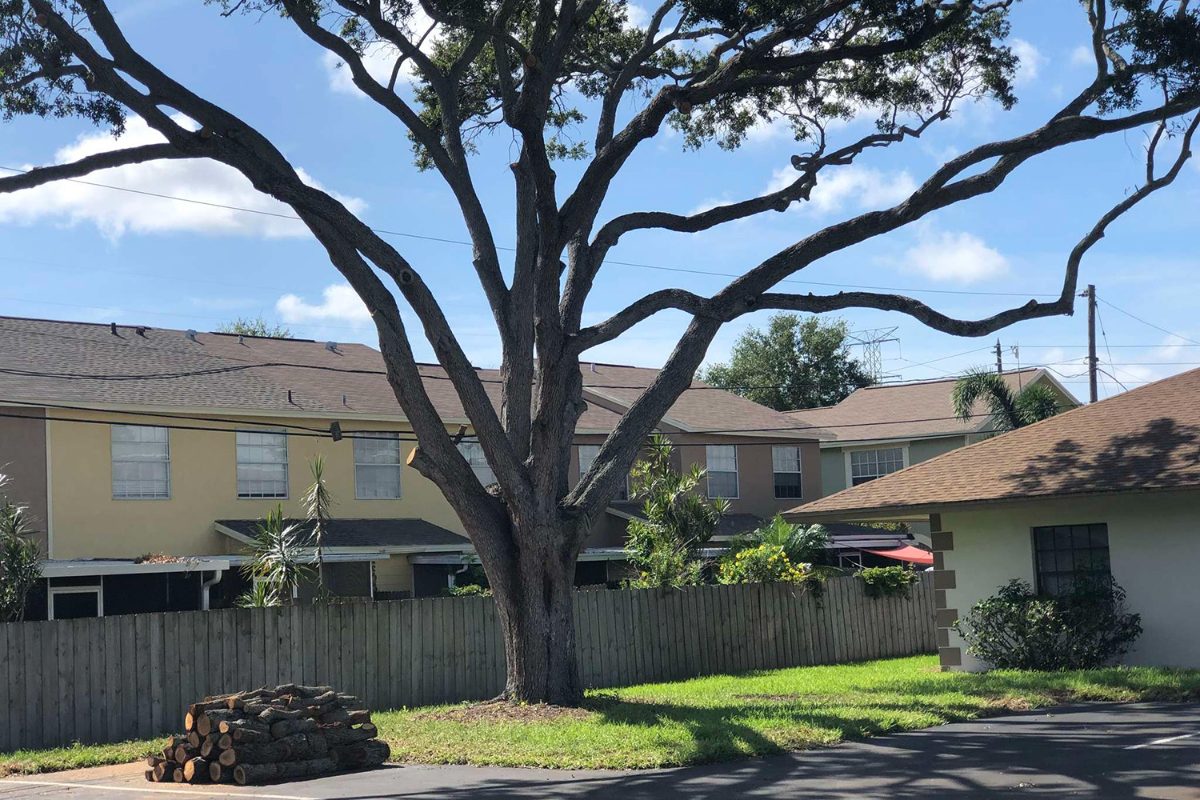
Tree roots usually go unnoticed until something starts to crack, lift, or clog. A sidewalk panel heaves up, a driveway splits, or a pool deck develops a ridge that was not there last year. When that happens, the instinct is to try root pruning yourself by chopping the offending root. Unfortunately, that can do more harm than the roots did.
Here is what root pruning really involves, when it makes sense, and how to protect your property without putting your tree at risk.
Signs Tree Roots May Be Causing Problems
- Cracked, lifted, or uneven sidewalks, driveways, and patios
- Surface roots that make mowing difficult or create trip hazards
- Cracks in a pool deck or shifting pavers near a large tree
- Slow drains or sewer backups, which can sometimes involve roots entering older pipes
- Roots growing close to a foundation wall, which can contribute to movement or moisture changes
Roots are not always the only cause of these problems, so it is worth having the cause confirmed before any cutting begins.
Why You Should Not Just Cut the Roots
Roots anchor a tree and supply it with water and nutrients. Cutting large structural roots, especially close to the trunk, can destabilize the tree and cause it to decline or even fall. A common rule of thumb for the “critical root zone” is about one foot of radius for every inch of trunk diameter, so a tree with a 12-inch trunk has important roots out to roughly 12 feet in every direction. Work inside that zone needs to be planned carefully.
What Professional Root Pruning Involves
- An assessment first. The species, size, health, and location of the tree all matter, as does how close the roots are to the trunk.
- Clean, targeted cuts. Roots are cut cleanly and as far from the trunk as practical, rather than torn out or ripped by machinery.
- Protecting the tree afterward. Proper watering and mulching help a tree recover from root work.
- An honest recommendation. If pruning would leave a tree unstable, the safer answer may be tree removal, followed by stump grinding.
You can read more about how we handle this work on our root pruning service page.
How to Prevent Root Problems
- Choose the right tree for the space, and plant large trees well away from foundations, pools, pipes, and pavement.
- Water deeply and less often, which encourages roots to grow down rather than just spreading near the surface.
- Mulch in a flat layer, keeping it back from the trunk, instead of piling it into a “volcano.”
- Watch for signs of root rot and other trouble, and schedule regular inspections as part of your seasonal tree maintenance.
Not sure whether a tree is a threat? See our list of 5 signs it is time to call a professional arborist.
Related Reading
- 5 Signs It’s Time to Call a Professional Arborist
- 5 Common Tree Diseases Found in Florida: Symptoms, Prevention, and Treatment
- Tree Stump Grinding vs. Removal: What’s Best for Your Florida Yard?
Related services: Root Pruning | Tree Removal | Stump Grinding
Worried About Roots Near Your Home?
A quick look from an experienced crew can tell you whether root pruning will solve the problem or whether the tree needs a different plan.
At Tree Tech LLC, we serve homeowners and businesses throughout Clearwater and Pinellas County with tree trimming, tree removal, stump grinding, hauling, and 24/7 emergency tree service.
Call (727) 410-4280 or send us a message today for a FREE estimate.