
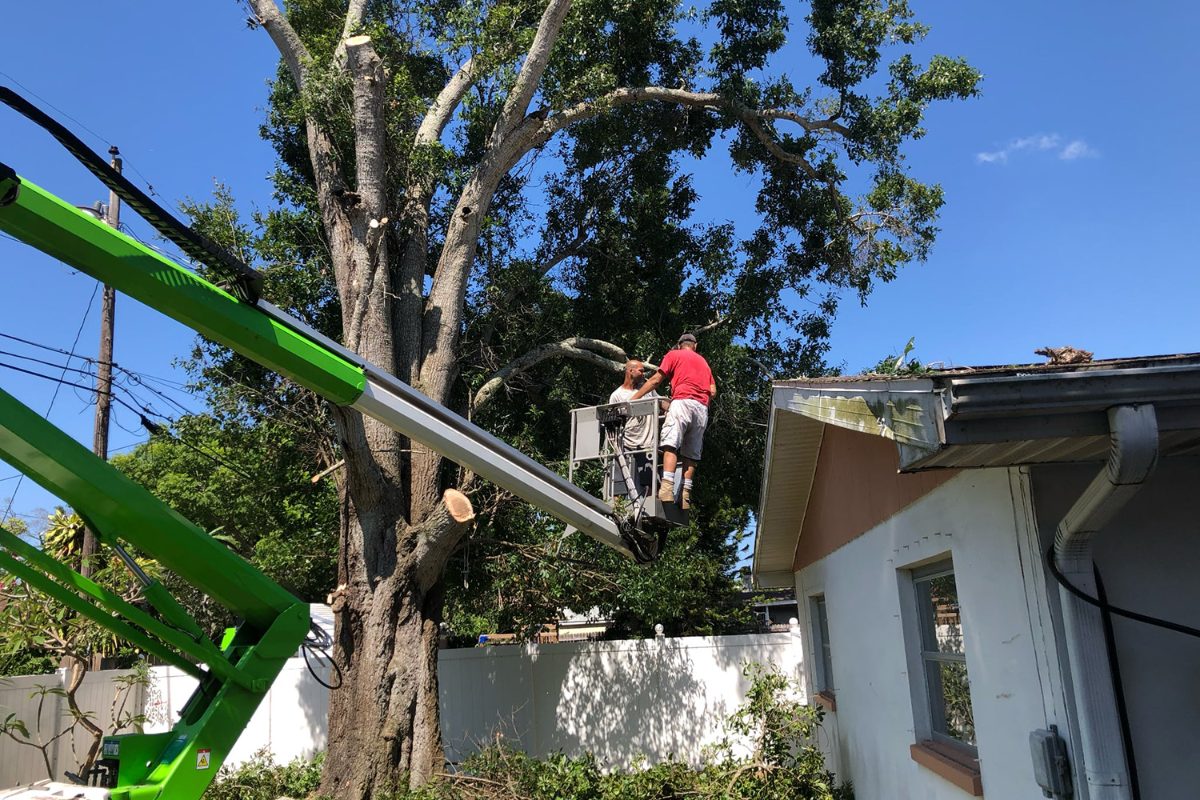
If someone has told you your tree needs “thinning” or a “reduction,” it is fair to wonder what that actually means. The two terms get mixed up constantly, but they describe very different pruning goals, and choosing the wrong one can leave a tree weaker, uglier, or more likely to lose limbs in a storm.
Here is how crown thinning vs. crown reduction compares, when each one makes sense, and what to watch out for before anyone climbs your tree.
What Is Crown Thinning?
Crown thinning is the selective removal of live branches throughout the canopy to let in more sunlight and air and to lighten the weight of heavy limbs. Done correctly, a thinned tree keeps its natural size and shape. The goal is a more open, balanced crown, not a smaller tree. You can learn more about our crown thinning service on our service page.
What Is Crown Reduction?
Crown reduction decreases the height or spread of a tree by cutting branches back to side branches (lateral limbs) that are large enough to take over as the new branch ends. It is used when a tree has outgrown its space, such as when limbs are growing toward a roof or crowding a structure and removing the tree is not the right answer.
Which One Does Your Tree Need?
- Dense, shaded canopy or heavy limbs: Thinning is usually the better fit, especially if grass or plants beneath the tree are struggling for light.
- A tree that is too tall or wide for its space: Reduction may help, as long as the cuts are made to proper side branches and the tree is healthy enough to recover.
- Dead, diseased, or broken branches: This is a different job, often called cleaning. It removes problem limbs without changing the shape of the crown. See our guide to common Florida tree diseases for warning signs.
- Palm trees: Palms do not have a branching crown, so neither technique applies. Palms should only have dead or hanging fronds removed, and DIY palm trimming can be risky.
What About Hurricane Season?
A properly thinned tree lets wind pass through the canopy more easily and carries less weight in its limbs, which is why many Pinellas County homeowners schedule canopy work before storm season. Thinning is not a cure-all, though. A tree with decay, a cavity in the trunk, or a weak root system can still fail. Our tree maintenance checklist and storm prep guide can help you plan.
Warning Signs of Bad Pruning
Be cautious of anyone who suggests “topping,” which means cutting the main stem or large branches back to stubs. Arborists widely discourage topping because it triggers weak, fast-growing shoots, leaves large wounds that invite decay, and can shorten a tree’s life.
Over-thinning is a problem too. A common guideline is to avoid removing more than about a quarter of a tree’s live canopy in a single season. Every species and every tree is different, so have an experienced crew look at your specific tree before agreeing to any plan.
Related Reading
- Tree Maintenance Checklist for Florida’s Rainy Season
- Why Mid‑Summer Storm Prep Is Critical for Florida Trees
- DIY Palm Tree Trimming Can Be Risky—Here’s Why
Related services: Crown Thinning | Tree Trimming | Tree Removal
Not Sure Which Pruning Your Tree Needs?
The right cut at the right time keeps a tree healthy and safe. The wrong one can cause damage that lasts for years.
At Tree Tech LLC, we serve homeowners and businesses throughout Clearwater and Pinellas County with tree trimming, tree removal, stump grinding, hauling, and 24/7 emergency tree service.
Call (727) 410-4280 or send us a message today for a FREE estimate.